Mittwoch, 14. Mai 2008

MSN leads pack on search ROI

A new study from Efficient Frontier puts Microsoft at the top of the heap in terms of search ROI and says Yahoo gets more out of its partners than any other search engine.

The study, which found that Google improved across the board, highlights some of the key differences between the major search engines from an advertiser's perspective.

Yahoo, which has 1,196 content syndication partners, saw 55 percent of its paid clicks business come from those partners, compared to 45 percent generated in-house. However, the clicks generated on Yahoo's own site appear to have performed better, with Yahoo's in-house clicks accounting for 58 percent of all conversions.

In stark contrast to Yahoo, Microsoft, which has only five partners (all of which are MSN sites), managed to keep its ROI high by avoiding syndication. According to the study, MSN achieved high ROI for advertisers because it didn't serve search results on partner sites where a searcher's intent can be relatively low as compared to the main page.

But Google, which is still the undisputed leader in terms of total search traffic, seems to have found a balance. The search giant has 431 partners, roughly a third of what Yahoo boasts, but it managed to outperform Yahoo in terms of ROI, mostly because it had a high conversion rate for searches conducted on Google.com.

Overall, the study found that search ads served on syndicated partner sites simply don't perform as well, which is bad news for Yahoo because the company is more heavily vested in that model.

In the meantime, Yahoo, which has managed to move beyond the Microhoo mess, appears to be focused on transitioning to universal search with its new Glue product. However, the value of Glue will be severely undermined if Yahoo can't get more paid clicks in-house.

TU München befragt Entscheider über Online-Marketing

Für eine neue Marktstudie sucht die TU München Teilnehmer mit Entscheidungsbefugnis im Marketing.

Am Lehrstuhl für Dienstleistungs- und Technologiemarketing an der Technischen Universität (TU) München startet jetzt die zweite Folge eines Studienprojekts zum Thema Online- und Affiliate- Marketing. Die aktuelle Erhebung soll die Grundlage für ein künftig jährlich erscheinendes, europäisches Barometer im Online- und Affiliate-Marketing bilden. Hierfür ruft der Lehrstuhl Manager mit (Mit-)entscheidungsbefugnis bei wichtigen Marketingentscheidungen zur Teilnahme an einer kurzen Online-Befragung auf. Unter externer Link in neuem Fenster folgthttp://www.unipark.de/uc/VC-Barometer/8ead steht der Fragebogen zum Ausfüllen bereit, das Ausfüllen dauert rund acht Minuten. Die Teilnahme sowie sämtliche Angaben erfolgen in anonymisierter Form und werden von Experten der TU München ausgewertet. Somit sind keinerlei Rückschlüsse auf Personen und Unternehmen möglich.


Die Studie wird im Rahmen eines Forschungsprojektes in Kooperation mit dem Online-Marketing-Unternehmen ValueClick durchgeführt. Im Herbst 2007 hatte die TU die Ergebnisse der ersten Folge veröffentlicht. Im Einzelnen untersucht Lehrstuhlinhaber Prof. Dr. Florian von Wangenheim 2008 mit seinem Team brandaktuelle Themengebiete wie Targeting, Vergütungsmodelle, die Verbindung von Online- und Offline-Marketingkampagnen sowie Marketingaktivitäten im Web 2.0 und Multichannel-Strategien. Außerdem wird der Bereich Affiliate-Marketing detailliert abgefragt, um eventuelle Unterschiede in verschiedenen EU-Mitgliedsstaaten zu identifizieren.

Icahn greift angeblich nach Yahoo

Handelsblatt:

Der US-Großanleger Carl Icahn kauft angeblich in großem Stil Aktien von Yahoo. Nach einem Bericht des Kabelsenders CNBC will der Milliardär auf der kommenden Hauptversammlung des Internetportals Druck ausüben, um den jüngst gescheiterten Übernahmeversuch von Microsoft neu zu beleben.

PORTLAND. Nach dem Bericht zog der Yahoo-Kurs an der Wall Street um mehr als fünf Prozent an. Wie es heißt, plant Icahn bis zu 50 Mill. Yahoo-Aktien oder 3,6 Prozent der ausstehenden Anteile zu erwerben. Er will angeblich eigene Kandidaten für den Verwaltungsrat aufstellen und damit auf der Yahoo-Hauptversammlung am 3. Juli eine Kampfabstimmung provozieren. Er muss seine Kandidatenliste jedoch bis spätestens Donnerstag offiziell registrieren. Beobachter glauben deshalb, dass er lediglich drei oder vier Kandidaten für den zehnköpfigen Rat nominieren dürfte.

Weil viele Aktionäre nach dem geplatzten Übernahmeversuch stark verärgert sind und aus Protest für Icahns Liste stimmen könnten, reichen schon Gerüchte über die Absichten des Großanlegers, um Yahoo-Chef Jerry Yang unter Druck zu setzen. Mit einer ähnlichen Taktik hatte Icahn unlängst das Management von BEA Systems zurück an den Verhandlungstisch mit dem Softwarekonzern Oracle gezwungen. Microsoft bot zuletzt 33 Dollar pro Yahoo-Aktie, Yang forderte 37. Nach dem Scheitern der Verhandlungen fiel der Kurs auf unter 25 Dollar. Völlig unklar ist, ob und zu welchen Bedingungen Microsoft an den Verhandlungstisch mit Yahoo zurückkehren würde.

Puls 4 bringt "Google Trends" ins Fernsehen

Puls 4 (Österreich) startet am 26. Mai 2008 ein neues TV-Magazin. Norbert Oberhauser präsentiert dann von Montag bis Freitag um 19:40 Uhr die "PULS 4 Google Trends" (Arbeitstitel). Das Format wird in Kooperation mit Google Austria produziert.

"In den 'PULS 4 Google Trends' werden die täglichen Suchbegriffe der Österreicher/innen auf Google ausgewertet, in einem Ranking als die Top 5 Themenbereiche zusammengefasst und in Folge in relevante Beiträge verpackt", so der Sender in einer Aussendung. "Durch die Verknüpfung der Suchbegriffe in Google entsteht auf PULS 4 ein Format, das direkt die Informationsbedürfnisse der Internetuser auch im TV aufgreift", heißt es weiter.

Moderiert wird das Magazin von Norbert Oberhauser, der seit 2005 bei "Cafe Puls" durch die Sendung führt.

Tägliches TV-Magazin über Google Abfragen startet am 26. Mai (in Österreich (wird es einen Stream geben?)) - Norbert Oberhauser moderiert

Neckermann.de startet eShop-Programm

Erstmals können Kunden des Online-Versandhauses eigene eShops mit individuellen Sortimenten betreiben.

Neckermann.de erweitert sein Partnerprogramm: Das Multi-Channel-Versandhaus bietet den Usern seines Online-Portals ab sofort individuell gestaltbare eShops unter eigenen Namen und mit individueller Internet-Adresse an. Das Angebot in diesen Online-Shops setzt sich aus dem Sortiment von neckermann.de zusammen, kann aber im eigenen Look&Feel präsentiert werden. Über eine Newsletterfunktion und Mini-Prospekte können die eShop-Partner jetzt mit ihren Kunden Kontakt aufnehmen.

Seit Einführung des Partnerprogramms Mitte 2007 habe sich die Online-Nachfrage über Absatzmittler um 39 Prozent erhöht, so ein Sprecher der Neckermann.de GmbH. Die Erweiterung des Angebots sei der logische Schritt.

Has YouTube cracked the viral riddle?

By Rich Cherecwich

There's no manual on how to create a viral video sensation, but YouTube is hoping it will have a little luck predicting which videos are on the cusp of becoming the next big thing.

The video sharing haven is launching buzz targeting -- a system that tries to foresee which videos are about to take off and allows advertisers to target their ads to these buzz-worthy clips. An algorithm developed by YouTube determines which videos are about to go viral by examining the acceleration of views, favorites and ratings activity.

"Every advertiser hopes that their campaign will be the next big viral hit online, and they come to YouTube to reach the millions of video viewers who are on the site everyday," said Shiva Rajaraman, YouTube product manager. "Buzz targeting lets them do both at the same time. They associate their brand with the hottest content of the day, while reaching the most engaged users in our community."

Despite wide popularity, monetizing YouTube has proved difficult thus far, and Google CEO Eric Schmidt has declared it a top priority for this year. Buzz targeting is the first in a slate of new products set to launch this year.

Adidas schlägt viral ein

Rund 2,6 Millionen Youtube-Abrufe seit dem 5. Mai - die Reichweite einer viralen Kampagne von Levi's kann sich sehen lassen.
Ein rätselhafter externer Link in neuem Fenster folgtFilm fasziniert seit 5. Mai die Youtube-Gemeinde. Zu sehen sind junge Menschen, die ihr ganzes sportliches Geschick an den Tag legen, um in eine Jeanshose zu springen. Knapp 2,6 Millionen Youtube-Nutzer ließen sich seit dem Launch schon von den jungen Akrobaten faszinieren, ohne zu wissen, wer sie instrumentalisiert hatte. Jetzt gibt sich Levi's als Marketer zu erkennen, der seine Agentur Cutwater aus San Francisco mit der viralen Kampagne beauftragt hatte.

Google Friend Connect Launched

Google released Friend Connect, a service for webmasters to add such gadgets as comments, reviews, or contact lists to their site. Furthermore, Friend Connect supports any creation from the Google gadget initiative “OpenSocial,” and also adds social features to a given site which connect the site to the social network site of a user. The latter, Google argues, holds the potential to increase your traffic, like when they post the event “Pete added a review at I-Love-Movies” to Orkut, which may make people visit I-Love-Movies. You may think of Friend Connect as a kind of “People Sense”, which is a code name Google gave the product; whereas Google AdSense provides an attachable ad layer for your site, this service lets you to attach a social layer.

You can sign up with the site now but it’s currently in limited invite-only stage, though you can already play around with the sample sites if you have a Google account.

How Friend Connect works

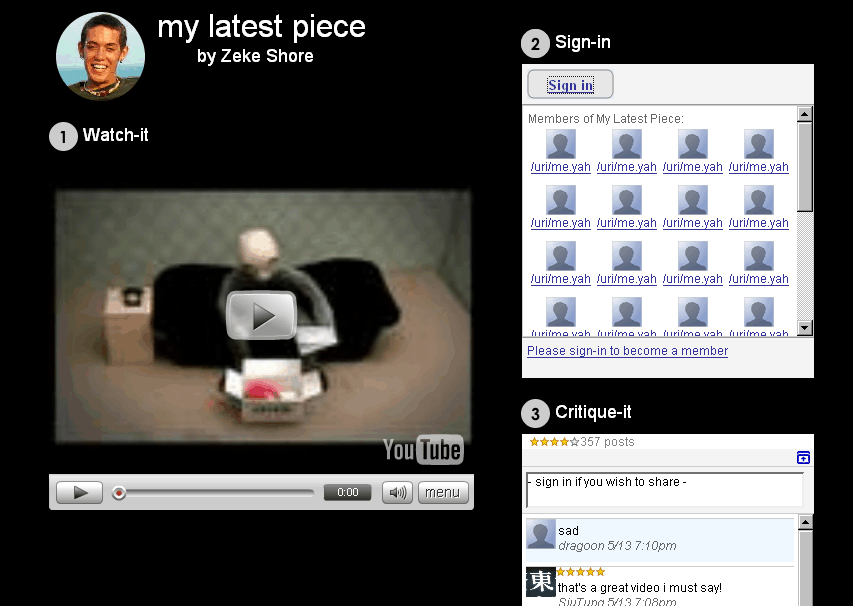
When you’re a webmaster, adding Friend Connect consists of copying the gadget and features you like into your site’s HTML template via some – layout-customizable – code snippet Google provides you (Google put up a video tour of this). For instance, the webmaster of the YouTube homemade movie review sample site “My Latest Piece” added a member & sign-in gadget as well as a review gadget. If you’re not logged in to the site with your Google account, the page will appear like this – note it’s quite slow at the moment:
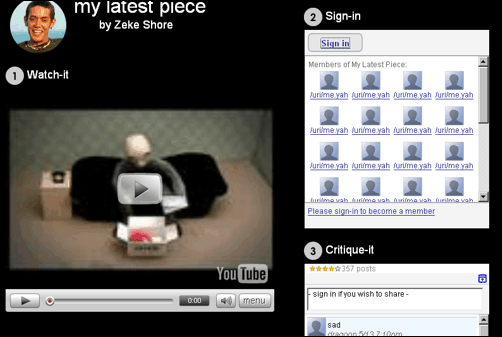
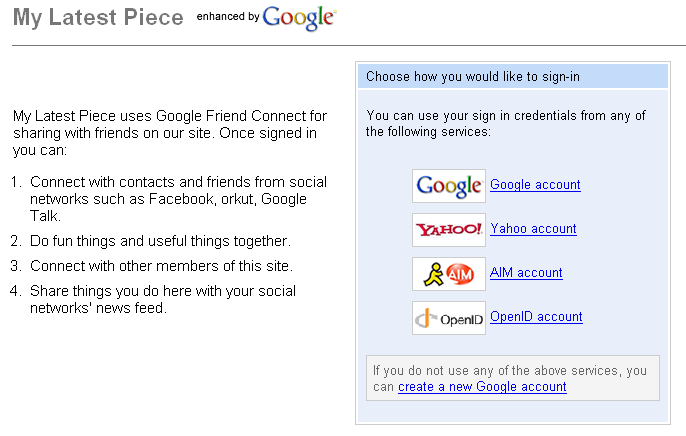
To the left side you can see the main content area, and to the right side, at the top you see the Sign-in gadget and below it, a Critique-it gadget. When you click Sign-in, a window pops up asking you to log in with one of various accounts (your Google account, Yahoo, AOL, or the cross-system OpenID):
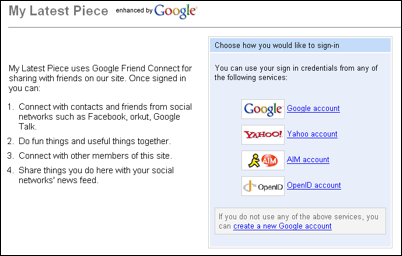
I’m picking the Google account option, which will redirect me to the usual Google login page, where I enter my Gmail email and password (the domain shown in the window is google.com, so it should be safe, though as Google decided to provide this login process in a popup, it’s a bit hard to tell if the URL address bar may be fake or not; I don’t know if modern browsers force the domain to be shown somewhere in popups, but if not, this may make phishing easier).

Afterwards, I’m provided with the following intro screen to configure my membership sign-up for “My Latest Piece” – we’re still in the popup here:
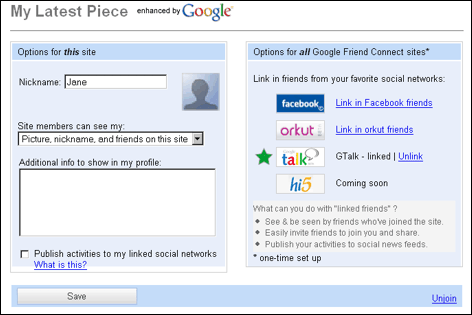
To the left you can pick a new nickname if you prefer, and you can also configure some site-specific description for you. If you want to, you can allow Google to send a stream of your activities on that particular site for display in other networks. To the right side of the membership intro screen, you can also configure which kind of friend groups you want to link in to the site – e.g. your Facebook friends, or your Google Talk friends (the latter activated by default when I tried) – which will determine, among other things, whether they will see your avatar in the site’s friends list whenever you’re logged in to it.

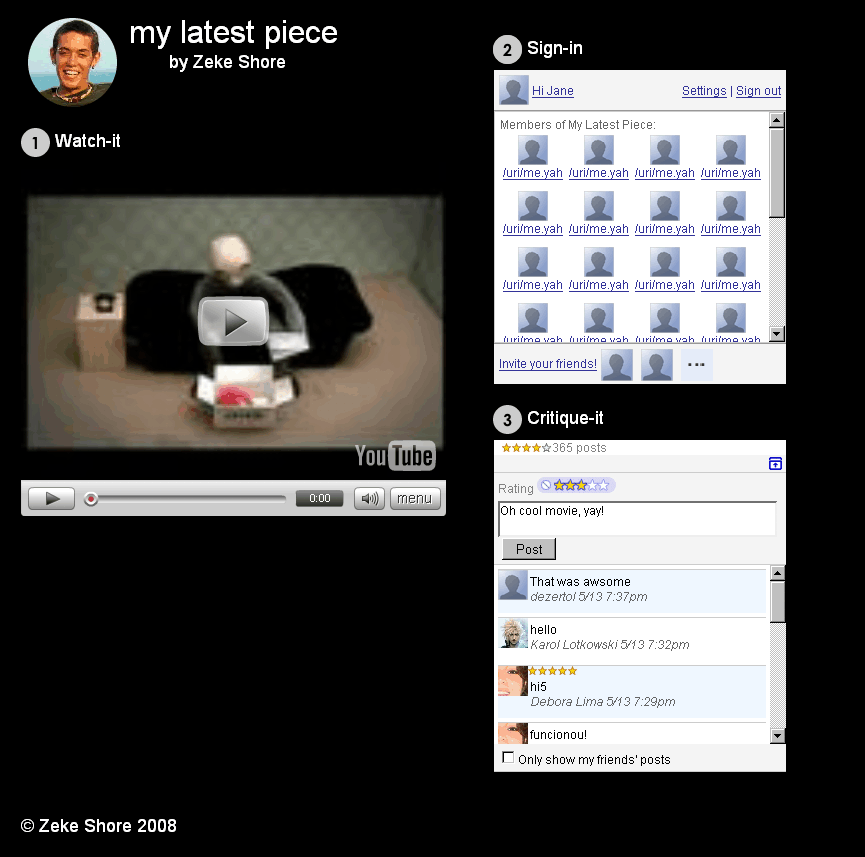
After you hit Save on that membership dialog, the popup window will close itself and the main “My Latest Piece” site will refresh, greeting you with e.g. “Hi Jane.” Now, you’re allowed to add reviews and such, or click on member portraits to see who someone is connected to and to perhaps ask them to be your friend (an oft-repeated and often annoying question on social sites):
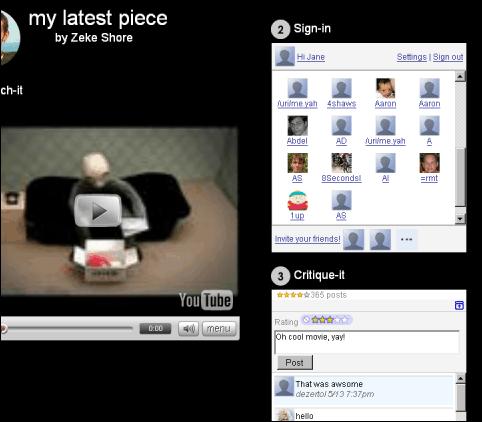
Adding a review of a movie is just one use case, though. Google lists several other use cases, like providing comments, posting pictures of a concert, adding a recipe, or comparing high scores on a games site. As third-party gadgets are supported as well, many other features are imaginable. In all of that, an important bonus for users utilizing these features on your site is that they don’t need to register yet another new account.

How useful this could be

While Google didn’t invite me to test the service live from a webmaster’s perspective yet, it looks like there could be very interesting stuff in it. Google seems to be trying to be the web features and account provider for the web at large – they allow other account providers, but they continuously bring the Google account more close to the action by positioning it near useful stuff (like the recent Google App Engine) – and in turn offer you some “lazy features" for your site that you can plug-in. This way, you don’t need to switch to e.g. Blogger.com if you just like the comments feature, or develop Facebook applications to create stuff that connects to Facebook.

On the down-side, the more you build your site based on Google features, the more you’re creating a (soft, completely voluntary) lock-in for yourself because the code behind all this does not run on your own server. When Google is down, or Friend Connect is slow (like right now), or you need more customization options or more features not provided, or Google changes their policy, or they cancel their service, or they transmit user data to the government based on local policies, or they add more advertisement inside the gadgets than you’d like to see, then replacing your site with alternative approaches at a late point may be quite tough. It’s not a risk that should make webmasters reject Google Friend Connect, it’s just something to keep in mind when deciding how far to take your ship into Google waters.

Aegis kauft Hamburger Online-Marketing-Agentur rmsarcar.com

Die Aegis Group mit Hauptsitz in London hat den deutschen Online-Marketing-Anbieter rmsarcar.com übernommen. Die Hamburger Agentur, die auf Suchmaschinen-Marketing und -Optimierung spezialisiert ist, bringt laut Aegis "gross assets" von fünf Millionen Euro mit. Zu den Kunden von rmsarcar.com zählen unter anderem Scout24, Skyeurope und TUI.com.

rmsarcar.com wird nun in das zur Aegis-Tochter Isobar gehörende iProspect-Netzwerk eingegliedert und künftig als iProspect Germany firmieren. Mit der Integration der Agentur verfügt das Suchmaschinen-Netzwerk über 69 Niederlassungen in 38 Ländern in Europa, den USA und Asien sowie über 600 Mitarbeiter. Das Isobar-Netzwerk ist laut Aegis weltweit die Nummer 1 im Bereich Digital-Marketing.

Robert Lerwill, CEO von Aegis, ist überzeugt, dass der Bereich Suchmaschinen-Marketing bis 2009 mehr als die Hälfte des deutschen Online-Marktes einnehmen wird. Aegis hat iProspect im Jahr 2004 übernommen. Nun will Lerwill Suchmaschinen-Marke


Aegis Group Acquires Search Agency Rmsarcar.com

Aegis Group plc, the British marketing communications firm, has acquired rmsarcar.com, a German search engine marketing firm for an undisclosed sum.

Established in 2004, rmsarcar.com offers search engine optimization and claims expertise across the travel, dating, retail, finance and insurance industries.

Following the acquisition, rmsarcar.com’s staff will undergo training and certification to become part of the Isobar network of IProspect search agencies Upon completion, rmsarcar.com will become IProspect Germany. This acquisition will give Isobar a total of 69 offices in 38 countries with some 600 search marketing employees worldwide.