Montag, 30. März 2009

Klickraten auf Bannerformate


Seit 2006 steigen die Klickraten langsam wieder an. Dank Video-Ads
(Bild: Adtech AG)

Ranking der Klickstärksten Bannerformate in Deutschland:

RangBannergrößeDE ØEuropa Ø
1.Video Ads2,611,7
2.Halfsize0,480,5
3.Pop-up/Layer0,330,5
4.Medium Rectangle0,240,2
5.Leaderboard0,170,1
6.Wide Skyscraper0,130,2
7.Skyscraper0,10,3
8.Fullsize0,070,2

Klickraten nach IAB-Formaten und Ländern aufgeschlüsselt:

BannergrößeEuropa ØUK ØD ØCH ØSE ØDK ØF Ø
Pop-up/Layer0,51,230,330,170,150,510,49
Video Ads1,71,752,611,820,951,421,93
Skyscraper (120x600) 0,30,160,1 0,120,1 0,170,26
Wide Skyscraper (160x600) 0,20,190,130,2 0,140,170,31
Medium Rectangle (300x250)0,20,150,240,110,040,140,17
Fullsize (468x60) 0,20,080,070,010,040,120,15
Halfsize (234x60)0,50,150,480,350,220,1 0,05
Leaderboard (728x90)0,10,090,170,230,150,150,09

Monetizing your Web App: Business Model Options

Building or launched a web site/application? Check out the choices below on how to generate money from your hard work. Note that these are not mutually exclusive: consider mixed hybrid models too.

Anything missing? Let us know in the comments.

Business Models


Model Variation Notes
I Immediate Revenue Models for generating regular income, cash-flow (‘Self-Sufficient’ models)
I.S Subscription Charge the end-user a regular, recurring fee. Consider:
  • Minimum contract lengths
  • Buy X (days/months/weeks) get Y (d/m/w) free
  • First X (d/m/w) free (‘Trial period’)
  • Discount periods
  • Pay to remove adverts
  • Pay for additional (‘premium’) content
  • Pay for API/advanced features
  • Pay for support subscription
I.S.F Fixed A single, fixed subscription cost (e.g. to access an online magazine or a specific service).
I.S.V Variable A number of fixed-price subscriptions are available to the end-user; fee dictates feature/usage limitations, etc. This includes the ‘Freemium’ model; a (usually limited) ‘free’ option alongside one or more paid options.
I.T Third-Party Supported The end-user receives the service for free; a third-party pays the fee for a returned service.
I.T.A Advertising One or more third-parties place clearly defined adverts within the website/application. Variations of adverts include graphical banners, text, inline, pop-over, interstitial, etc. Normally charged by cost per click, cost per action, or cost per thousand impressions.
I.T.S Sponsorship One or more third parties become the ‘official’ sponsor(s) of the website. This could include fixed (non-rotating, typically prominent) adverts, integration of third-party branding (colours, slogans) and/or licensing agreements.
I.T.C Paid Content Advertorials: third-parties pay to include marketing-led content on the website.
I.T.P Paid Placement Third-parties pay to be included in lists or in the application (e.g. comparisons, reviews, entertainment listings).
I.T.R Referrer End-users are directed to third-party sites, which pay a fee to the website owner for any referred transactions (e.g. comparison sites).
I.T.L License Content Third-Parties are given access to re-use the content from the web-site for their own purposes.
I.P Payments The end-user makes individual, ad-hoc transactional purchases.
I.P.U Pay-per-use Micropayments: the end-user is charged a fee to use an online service (one-off, or for a limited time). This includes the 'brokerage' model, where user(s) are charged a fixed-price or percentage per transaction (e.g. ebay). This also includes the purchase of ‘credits’ e.g. 10 uses of the service for a fixed cost. Discounts can be offered for bulk purchases.
I.P.P Physical Products The typical e-commerce model; includes books, CDs, holidays, tickets, etc. Typically each ‘physical product’ has a non-arbitrary cost associated with its production.
I.P.V Virtual Products The end-user purchases a ‘digital’ product that typically has a negligible cost of replication. This includes virtual gifts (e.g. Facebook), in-game items (e.g. World of Warcraft), and other virtual assets (e.g. land in Second Life).
I.P.R Related Products The end-user has free access to the main product/service. An additional, optional charge is made for related ‘added value’ products/services, e.g. documentation, support, commercial versions, related iPhone or Android application, etc.
I.P.D Donations The website relies on voluntary end-user donations (e.g. a ‘Tip Jar’).
L Long-Term Revenue Strategic, ‘Invest and Reward’ models where costs are incurred initially for a longer-term ‘pay off’.
L.E Establish and Exploit Attract a substantial audience before monetizing.
L.E.R Re-use/Re-sell Re-sell/re-use the data/content, usually from User Generated Content websites e.g. create books, posters or other purchasable products from data/content created on site.
L.E.P Platform Establish a platform, then charge for third parties to participate once an audience has been established e.g. iPhone. See also Facebook.
L.E.B Branding Build a ‘personal brand’ for yourself/your company. Once awareness is raised, go on Conference/Workshop/‘Expert’ circuit, or release a book, etc.
L.S Sell/Exit Create a popular application/website, then make it someone else’s problem to monetize e.g. YouTube

Meta-Models

The following business models can be applied in addition to most of the basic revenue models described above.


Model Variation Notes
M.R Revenue Share End-users are offered a cash incentive to make the website/application generate revenue, by sharing a percentage of revenue with them (usually based on their personal referrals or popularity of their content).
M.R Re-Seller The end-user can re-sell the online service.
M.R.A Affiliate The end-user is paid to direct customers to the website, typically by listing/selling the products/services elsewhere.
M.R.W White Label The end-user can brand/tailor the online service and re-sell it as their own (typically taking a percentage of the generated revenue, or paying a fixed subscription cost to the original service).

Popular Business Models

We spent a few hours going through the Webware 100 Top Web Apps for 2008, analysing the business model(s) used by each. The chart below shows the results of this survey: 34% use Advertising, 12% a Variable Subscription model, and 8% each for Virtual Products (typically digital downloads), Related Products (typically a large software company offering a free product to attract you to their platform) and Pay-Per-Use.

Chart showing results of business model survey for top 100 web apps of 2008

Samstag, 28. März 2009

Google setzt auf semantische Suche

Der Suchmaschinenkonzern Google bietet bald auch semantische Suche. Der Konzern hat augenscheinlich erkannt, dass die Firmen, die solche Funktionen im Gepäck haben, einige Vorteile am Markt nutzen können. Deshalb wird die eigene Search Engine jetzt erweitert.

In der Folge werden die Nutzer bessere Suchergebnisse erhalten, hieß es aus der Konzernzentrale. Dabei werden die spezifischen Suchbegriffe genauer eingegrenzt und verwandte Begriffe mit einbezogen, um passendere Ergebnisse zu erzielen.

Die Technologie soll dabei helfen, Assoziationen besser zu verstehen und die thematische "Umgebung" des Suchbegriffes zu berücksichtigen. Wie die Google-Manager Ori Allon, Technical Lead Search Quality Team, und Ken Wilder, Snippets Team Engineer, in einem Firmen-Blog schrieben, geht es um die Kundenfreundlichkeit.

Wer beispielsweise den Suchbegriff "Prinzipien der Physik" eingibt, erhält bessere Ergebnisse, weil die Suchmaschine Folgendes versteht: Die Begriffe "Big Bang", "Quantenmechanik" und ähnliches sind eng mit dem eigentlichen Suchbegriff verknüpft und werden somit in die Ergebnisliste mit aufgenommen. Beim Stichwort "Kanarische Inseln" soll die Suchmaschine "mitdenken" und Begriffe wie "Lanzarote" und "Fuerteventura" berücksichtigen.

Bei längeren Anfragen und mehreren Begriffen wird demnach ein Textbaustein, ein so genanntes Snippet angefügt. Dies enthält Text aus der gefundenen Site, die den oder die Suchbegriffe enthalten. Diese Snippets können jetzt länger sein als die sonst üblichen zwei Zeilen. Die soll vor allem bei detaillierten Suchanfragen sinnvoll sein und dem Nutzer einen Eindruck von der Site geben, noch bevor er sie besucht. Die neuen Funktionen starten bereits jetzt in 37 Sprachen rund um den Globus, darunter auf Deutsch.

Dienstag, 24. März 2009

Two new improvements to Google results pages

3/24/2009 07:18:00 AM
Today we're rolling out two new improvements to Google search. The first offers an expanded list of useful related searches and the second is the addition of longer search result descriptions -- both of which help guide users more effectively to the information they need.

More and better search refinements

Starting today, we're deploying a new technology that can better understand associations and concepts related to your search, and one of its first applications lets us offer you even more useful related searches (the terms found at the bottom, and sometimes at the top, of the search results page).

For example, if you search for [principles of physics], our algorithms understand that "angular momentum," "special relativity," "big bang" and "quantum mechanic" are related terms that could help you find what you need. Here's an example (click on the images in the post to view them larger):

Let's look at a couple of examples in other languages. In Russian, for the query [гадание на картах] (fortune-telling with cards), the algorithms find the related terms "таро" (tarot), "ленорман" (lenormand) and "тибетское гадание мо" (tibetan divination mo). In Italian, if you search for [surf alle canarie] (surf at the canary islands), we now offer suggestions based on the three most famous Canary Islands: "lanzarote," "gran canaria," and "fuerteventura":

We are now able to target more queries, more languages, and make our suggestions more relevant to what you actually need to know. Additionally, we're now offering refinements for longer queries — something that's usually a challenging task. You'll be able to see our new related searches starting today in 37 languages all around the world.

And speaking of long queries, that leads us to our next improvement...

Longer snippets

When you do a search on Google, each result we give you starts with a dark blue title and is followed by a few lines of text (what we call a "snippet"), which together give you an idea of what each page is about. To give more context, the snippet shows how the words of your query appear on the page by highlighting them in bold.

When you enter a longer query, with more than three words, regular-length snippets may not give you enough information and context. In these situations, we now increase the number of lines in the snippet to provide more information and show more of the words you typed in the context of the page. Below are a couple of examples.

Suppose you were looking for information about Earth's rotation around the sun, and specifically wanted to know about its tilt and distance from the sun. So you type all of that into Google: [earth's rotation axis tilt and distance from sun]. A normal-length snippet wouldn't be able to show you the context for all of those words, but with longer snippets you can be sure that the first result covers all those topics. In addition, the extra line of snippets for the third result shows the word "sun" in context, suggesting that the page doesn't talk about Earth's distance from the sun:

Similarly, if you're looking for a restaurant review that covers all the parts of the meal, longer snippets can help:

But don't just take our word for it — try it out yourself with your favorite long, detailed query.

These are just two recent examples of improvements we've made. We are constantly looking for ways to get you to the web page you want as quickly as possible. Even if you don't notice all of our changes, rest assured we're hard at work making sure you have the highest quality search experience possible.

Freitag, 20. März 2009

March Madness Search Strategies

It goes without saying that during the NCAA Basketball Tournament, visits will increase to the websites that provide coverage of the games – particularly on those that offer live video during work hours. As the tournament gets underway, we decided to look at the search terms that are driving traffic to websites hoping to attract viewers and ultimately drive ad revenues during March Madness.

We created a portfolio of the most popular search terms around the NCAA tournament to understand what search strategies are being employed to drive traffic. Last week, the share of clicks to the portfolio from organic search results was 90%. Among the top 10 search terms ranked by the share of clicks, 5 received 100% of their clicks through organic results.

NCAA Search Terms 3-14-09.png

This high share of organic results shows that many of the websites are well-optimized for the top search terms, with the official website of the NCAA leading the pack.

NCAA organic websites 3-14-09.png

Of the 10% of the traffic that came from paid clicks, Google captured the majority of the traffic coming through sponsored listings. 94% of the paid clicks for all of the search terms within the NCAA March Madness portfolio for the week ending 03/14/2009 were through Google.

NCAA paid Clicks by engine3-14-09.png

The overall share of paid traffic is fairly low for the portfolio of NCAA March Madness search terms and many of the terms are only driving organic traffic, so there should still be affordable opportunities across all of the search engines. Some of the players can take advantage of sponsored links for placement next to the organic results and possibly intercept some traffic.

Early Beta Data From Microsoft AdSense Competitor Encouraging

techcrunch:

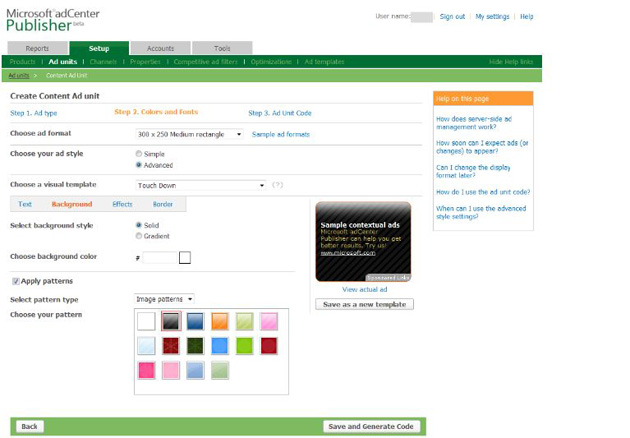
We are getting reports that Microsoft’s PubCenter, a self serve thirty party ad publishers platform through AdCenter, is doing quite well with beta testers. Microsoft began testing PubCenter last summer.

One beta tester we spoke with said PubCenter is paying significantly more than Google AdSense and Yahoo Publisher. All three of these programs let third party publishers add contextual ads next to their content via a self-service format.

Google has dominated this space in the past (and all other contextual advertising) because it offers publishers higher fees for ads. But this might change when Microsoft unveils PubCenter to the greater publisher community, particularly if Microsoft is aggressive in revenue splits to gain market share.

Currently, PubCenter is being tested by a small subset of web publishers. Our tipster says that he receiving from four times more in revenue Microsoft than Google AdSense. And the money isn’t the only advantage PubCenter has over AdSense. The advertisement themselves are are higher quality than Google’s ads, he says, and equally as targeted towards the content. He says that Microsoft seems to be more stringent about letting advertisers into the program, versus what seemed like an advertiser free-for-all though Google’s AdSense. Of course, with a smaller inventory of advertisers, it’s tougher to provide contextual ads for obscure content.

We also heard that Microsoft is allowing publishers to get creative with ads by allowing them to set background images. Google AdSense only allows publishers to change the color of the ads.

Microsoft is allowing test partners to publish Google ads on their site as long as the publisher doesn’t have an exclusivity agreement with Google. Third party ads are a controversial concept, since advertisers expect the click throughs and conversions that they get from search. Google has been sued for fraud because ads placed on parked pages weren’t producing results. But if Microsoft is offering a better program, with nifty, more targeted ads, then publishers and advertisers alike might make the switch (or use both, if possible).

Microsoft recently enlisted digital media executives, including execs from IAC, Wall Street Journal Digital Network, The New York Times Co., Time Inc. and Viacom Inc. to consult on next-generation advertising platform.

Microsoft said this about PubCenter in February:

PubCenter will be built on the existing adCenter Publisher architecture that is currently in beta and will include the convergence of technologies and tools provided by the former Atlas and Rapt solutions, as well as a self-serve offering. The new platform will provide innovative forecasting and order management solutions, advanced analytics tools, and enhanced targeting functionality to enable all digital media publishers to have access to the tools and technology they need to provide valuable and relevant ad content to their advertising partners.

Here are some screenshots of Microsoft’s ads on a publisher’s site and an ad with an image in the background:


Mittwoch, 18. März 2009

Online-Handel wächst im zweistelligen Prozentbereich

Der Trend im Web Waren zu kaufen, ist ungebrochen. Damit können sich Online-Händler über steigende Umsätze freuen. Eine aktuelle Analyse belegt die enorme Wachstumsdynamik des Vertriebkanals Internet.
Für rund 13,6 Milliarden Euro haben deutsche Internetnutzer im vergangenen Jahr Waren im Internet gekauft. Damit legte der E-Commerce-Umsatz mit einem Plus von 19 Prozent deutlich zu. Die positive Entwicklung ist in erster Linie darauf zurückzuführen, dass immer mehr Menschen im Netz einkaufen. So stieg die Anzahl der Internet-Käufer um zwölf Prozent auf 29,5 Millionen. Die Einkaufshäufigkeit blieb mit 9,4 Käufen pro Person und Jahr fast konstant. Die durchschnittlichen Ausgaben pro Kauf stiegen hingegen um sieben Prozent auf knapp 49 Euro. Das sind die zentralen Ergebnisse des 'WebScope zum Kaufverhalten der Deutschen im Internet' von der Gesellschaft für Konsumforschung.

Allerdings zeigt sich, dass einzelne Konsumentengruppen das Internet als Einkaufsmöglichkeit völlig unterschiedlich nutzen. Hierfür hat die GfK Panel Services Deutschland die Konsumenten in sieben verschiedene Online-Nutzer-Typen segmentiert. Die meisten Verbraucher - insgesamt knapp 35 Prozent - gehören zur Gruppe der Selektivnutzer. Diese Gruppe erwirtschaftet aber nur knapp 13 Prozent des Umsatzes. Den größten Anteil am Umsatz liefert die Gruppe der Onlineshopper und Banker, die mit gut 20 Prozent die zweitgrößte Gruppe der Internetnutzer stellen. Sie erwirtschafteten knapp 35 Prozent des E-Commerce-Umsatzes.

Twitter and UK newspaper websites

Last week (w/e 14/03/09) Twitter.com was the 54th most visited website in the UK, up from 66th the week before. One consequence of Twitter rapid rise up the rankings is that the micro-blogging service has now overtaken most of the UK newspapers online. As the chart below illustrates, last week Twitter received more UK Internet visits than the homepages of the Guardian, Times, Sun and Telegraph. It also over took Google News UK. Of the main newspaper homepages, only the Daily Mail received more UK Internet visits than Twitter last week.

UK_Internet_traffic_to_Twitter_Google_news_newspaper_websites_2009_chart.png

There are few caveats here, the first relating to how we categorize newspaper websites within Hitwise. Wherever possible we split out topic specific domains for the newspapers, particularly the broadsheets (e.g. Times Online - Business, Telegraph Sport, Technology Guardian, etc.). Consequently the traffic illustrated in the chart above refers only to the newspapers’ main homepages; although in every case these do receive the majority each title’s visits.

However, it is also important to point out that we are only measuring traffic to the Twitter homepage and not hits via third party applications such as Tweetdeck or Twitterrific. Given that some people claim that these exceed the direct hits via the website, it is also fair to say that actual Twitter usage is higher than our numbers imply. Therefore, even taking all of these caveats into accounts, the trend is clear: in the UK, Twitter now receives more UK Internet traffic than most of the main newspaper websites and is growing at a faster rate.

Although Twitter is a news source for many, it is also a source of traffic for news websites. During February, 9.6% of Twitter’s downstream traffic went to News and Media websites, and 41% of that went to the News and Media – Print sub-category, which is dominated by the newspaper sites. The chart below illustrates the top News and Media – Print websites to receive traffic from Twitter over the last year. As you can see, the Guardian currently receives more traffic than any of its competitors. And not only is its homepage the top recipient of Twitter traffic, but three of its sections (Technology, Comment is Free, and Media) also appear in the top 10.

UK_Internet_traffic_from _twitter_to_the_Guardian_daily_mail_telegraph_sun_new_york_times_2008_2009_chart.png

So, Twitter is becoming a significant source of traffic for news sites, but how does it fare when compared with other news aggregator websites? As in the US, Twitter has already overtaken Digg in the UK and, as the chart below illustrates, is now a bigger source of traffic for News and Media – Print websites. However, despite having overtaken Google News UK in terms of Internet visits, Twitter still sends only a sixth as much traffic to Print websites. Twitter is also a smaller source of traffic than News Now, while Facebook sends over ten times as many visits to the category.

Online_newspaper_traffic_from_facebook_twitter_news_now_digg_UK_2009_2008_chart.png

Despite Recession, More Than 50% of Marketers Increase Spending on Social Media

In a recession, budgets are tightened, jobs are cut, and those who remain are expected to do more with less. Given this type of economic reality, it's surprising to hear of an industry reporting an increase in spending on anything, much less on something as new as social media. Yet that's exactly what's occurring. According to a new Forrester Research survey of 145 global interactive marketers in both B2B and B2C companies with more than 250 employees, the use of social media as a marketing tool is on the rise. What's more, Forrester reports that over 50% of marketers said they will be increasing their spending on social media marketing in the coming months.

Part of the reason for this increased spending is the low cost of social media tools. Compared with larger expenditures like advertising, social media requires much less investment. In fact, three-quarters of those surveyed who knew their budgets said they allowed for $100,000 or less for social media tools over a 12-month period.

It's also easier for firms to increase spending on social media applications because they aren't yet formalized line items in marketing budgets. Because of their relatively new and still somewhat experimental nature, marketers aren't necessarily predetermining the exact amount they'll spend on these types of applications. Instead, some marketers (45%) pull together funding for social media projects as needed while others (23%) scrape together funds from wherever possible to pay for their various social media efforts.

Yet despite the unconventional methods which are used to fund many companies' social media investments, 53% of marketers believe they will increase their spending on these initiatives over the next six months. Another 42% expect their investments to remain the same. That makes sense since almost all marketers surveyed were already using some form of social media, whether blogs, social networking sites, or user-generated content.

Unfortunately though, marketers who still fund social media projects only as experiments may be putting future initiatives on shaky ground. Without concentrating on measurable objectives, it will be difficult to justify further investment in the future. Businesses also need to understand that social media efforts should be analyzed for effectiveness based on things like customer awareness through activity, interest through interaction, and intent to buy through registration and/or questions. These are the types of successes that social media can deliver; less important are traditional web analytics like page views.

Also key to long-term success in social media is having the necessary assets on hand. For example, social media strategists and community managers should be dedicated resources.

To prove the value of social media to the business, Forrester recommends marketers start with a listening platform and then integrate social media marketing metrics like share of voice and engagement to demonstrate the value of these new tools.

Twitter Experimenting With Text Advertising

Twitter, the subject of endless business model speculation, added another weapon to the arsenal today - house advertisements on the home page when you’re logged in, and some search results.

The advertisements currently only link internally to Twitter Search or the Twitter Widget. But it isn’t much of a stretch to assume they’re testing the units for possible third party advertisements in the future. Twitter Japan, which launched a year ago, has included display ads from the beginning.

Last summer Twitter CEO Evan Williams said he thought Twitter’s strongest revenue potential would come from charging for commercial use by brands. But it’s clear that the company will experiment with a number of different potential streams - we think Twitter search has tremendous revenue opportunity.

Facebook usage statistics by country - March 2009

- Not many changes in position for the top countries by Facebook usage (though numbers are increasing significantly), but further down the list there have been a number of developments

- Facebook usage in Asia is increasing quickly with both Indonesia and Malaysia showing significant increases in Facebook use

- In South America Facebook usage is still climbing, with Colombia now leading the way, but also jumps in Facebook usage in Venezuela, Argentina and Chile

- In the battle of the Nordics, the number of Facebook users in Sweden has overtaken the number of Facebook users in Denmark - though Denmark has the world's highest Facebook penetration with around 2/3 of the Danish population classified as active Facebook users

There are now 27 countries with over 1 million people using Facebook. Here are the latest statistics for March 2009 (taken from the Facebook interface):

CountryFacebook users 30/12/08Facebook users 17/03/09
% growth Dec 08 - Mar 09
USA42,078,96055,329,460
31.5%
UK14,937,81017,765,160
19%
Canada
10,862,04011,655,980
7.3%
Turkey
7,394,3409,957,180
25.5%
France6,587,2408,742,900
32.7%
Italy
5,585,7008,678,000
55.4%
Australia
4,330,0405,152,960
19%
Colombia
3,632,7604,508,960
24.1%
Chile
4,153,0204,341,240
4.5%
Spain
2,596,0803,948,300
52.1%
Argentina
2,255,3003,353,280
48.7%
Venezuela
1,874,2202,578,540
37.6%
Indonesia
897,040
2,236,380
149.3%
Sweden
1,696,7002,097,840
23.6%
Denmark
1,776,2602,093,900
17.9%
Belgium
1,655,9402,043,380
23.4%
Mexico
1,440,6401,932,940
34.2%
Norway
1,456,1401,884,800
29.4%
Germany
1,255,4801,772,380
41.2%
Hong Kong
1,458,5201,683,980
15.5%
Switzerland
1,122,9001,391,220
23.9%
India
1,071,2801,367,560
27.7%
Greece
999,5801,360,620
36.1%
South Africa
920,200
1,227,220
33.4%
Finland
918,9401,131,580
23.1%
Egypt
822,5601,125,900
36.9%
Malaysia
850,4201,069,260
25.7%

Adwords mit favicons...

Also dieser Test bei AdWords ist bisher total an mir vorbeigegangen. Google liefert bei AdWords-Anzeigen neuerdings Favicons mit aus, was die Anzeigen wirklich schick erscheinen lässt. Ich habe zwar bisher keine Möglichkeit im Adwords-Konto gefunden die Favicons hochzuladen und denke mal, dass sich Google selbst darum kümmert. Es erscheinen aber bisher nur bei wenigen Anzeigen Favicons, sodass ich noch nicht richtig ein System erkennen konnte.

Was kann das nun für Auswirkungen auf SEM-Kampagnen haben? Ich vermute mal, dass hier Markenunternehmen mit recht bekannten Logos einen Vorteil haben und sich dadurch die Klickrate erhöhen wird. In dem Beispiel bei Immobilien hat leider keiner ein sehr einprägsames Logo als Favicon, was bei der Anzeige von Vodafone schon wieder ganz anders ist.

Dienstag, 17. März 2009

Online ad spend on the rise despite the economic downturn

Online ad spend on the rise despite the economic downturn Figures released this week by the Advertising Association reveal that online advertising spend grew to £3.3 billion in 2008, which is an increase of 17% year on year. This is despite a drop in overall UK ad spend of almost 4%.

In contrast, all other advertising mediums saw a drop in ad spend with newspapers falling by 12% to £4.1 billion, television by 5% to £3.8 billion, and radio by 9% to £454 million. Meaning that online advertising is shown to be the only sector to buck the trend and actually increase year on year.

The figures come from the Quarterly Survey of Advertising Expenditure report which was compiled by the World Advertising Research Centre (WARC) on behalf of the Advertising Association. The survey shows that the biggest drop in spend was seen in Q4 of 2008 when total UK ad spend was down by almost 10% compared to the previous year.

With the online platform proving itself to be the only advertising medium to show steady growth throughout 2008, it would seem that in the midst of a credit crunch, online is becoming the more attractive option for media buyers.

Another recent report on online ad spend suggests that social media marketing spend could also be set to increase during the recession. The report from Forrester Research explains that businesses are increasingly using social media marketing to engage with customers as it is inexpensive and helps to get marketing messages out to the public. It seems that if there's one advertising budget businesses can't afford to cut - it's the online one.

Samstag, 14. März 2009

Landing Page Relevancy accounts for only 5% of Quality Score? Can it be so?

Live from the Googleplex, Hal Varian explains, the Google Ads Auction.

This is a must-see, even if Hal isn’t deserving of an Oscar…

Do you think the pie chart of Quality score is accurate?

  • 60% CTR (“user feedback”)
  • 30% Adwords Account Architecture (“relevancy”)
  • 10% Landing Page Factors (that’s all? -WTF)
  • Assuming Hal’s pie chart is accurate…

Landing Page Factors (only 10%) includes: relevancy of landing page, original content, easy navigation, transparent ie. privacy policy page, load time, contact us page, little use of pop ups/unders, and more? Relevancy of the landing page is only one of many components of the landing page formula, did you catch that? We don’t know exactly how much power this carries, but my guess is 30-50%.

If that is true…

Landing page relevancy influence over overall Quality Score accounts for only 5% of Quality Score?!

That can’t be, can it? Google prides itself on Relevancy so, how can this possibly be I ask you? I hope I’m wrong on this.

If I am correct though, this could help explain irrelevant ads and landing page experiences.

Donnerstag, 12. März 2009

27 Huge Publishers Join To Replace The Banner

27 publishers with a reach of about 109 million unique visitors per month -- that's 66% of the total U.S. Internet audience -- have agreed to try one of three new online ad formats sometime before July. The publishers are all members of the online publishers association (OPA).

Here's how an OPA rep described the units:

  • The Fixed Panel (recommended dimension is 336 wide x 860 tall), which looks naturally embedded into the page layout and scrolls to the top and bottom of the page as a user scrolls.
  • The XXL Box (recommended dimension is 468 wide x 648 tall), which has page-turn functionality with video capability.
  • The Pushdown (recommended dimension is 970 wide x 418 tall), which opens to display the advertisement and then rolls up to the top of the page.

The formats they've agreed on all have one trait in common: they are much bigger and more attention-grabbing than the banner, which is despised by publishers, advertisers and readers alike as an ad unit.

This heatmap image from a 2007 eye-tracking study is perhapst the best illustration of why publishers and advertisers hate banners:

Here's what the Pushdown unit looks like closed and then open:

The OPA wasn't able work up any mocks for the other two new ad formats, but from what we can tell, they'll look remarkably similar to the units VideoEgg mocked-up for a recent presentation on the future of online advertising:

The 27 participating publishers are:

  • BabyCenter
  • Bizjournals
  • Bloomberg
  • BusinessWeek
  • CBS Interactive
  • CNN
  • Condé Nast Digital
  • Discovery Communications
  • ESPN
  • Forbes.com
  • FOXNews Digital
  • IDG
  • iVillage Network
  • Martha Stewart Living Omnimedia
  • Meredith Interactive
  • msnbc.com
  • MTV Networks
  • NBC Universal
  • New York Media
  • The New York Times
  • Reed Business Information
  • Reuters, Time Inc.
  • USA Today
  • The Wall Street Journal Digital Network
  • Weather.com

Mittwoch, 11. März 2009

Top 10 der Kategorienzuwächse nach Anzahl deutscher Unique Visitors Januar 2009 im Vergleich zu Januar 2008


KategorieGesamtzahl Unique Visitors (000)


Januar 2008Januar 2009Änderung in Prozent
Gesamtes Internet: Gesamtzahl der Benutzer 33,90437,64611%
Wetter4,2965,87537%
Multimedia17,50423,77036%
Soziale Netzwerke17,37823,56436%
Transportunternehmen3,6444,79332%
Unterhaltung22,40229,18930%
Instant Messengers15,54319,42125%
Portale24,84930,88224%
Dienstleistungen25,95632,17024%
News/Information17,09121,05623%
Glücksspiele6,2847,70223%

Top 10 der Zuwächse bei Websites Januar 2009 im Vergleich zu Januar 2008:


Gesamtzahl Unique Visitors (000)
WebsiteJanuar 2008Januar 2009Änderung in Prozent
Gesamtes Internet: Gesamtzahl der Benutzer 33,90437,64611%
Yasni.de3232,037530%
Facebook.com5563,143465%
Pennergame.de6971,793157%
Quoka Verlag1,1181,97777%
The Mozilla Organization4,2057,21972%
Deutsche Post AG Sites2,7524,03347%
Preisroboter.de1,1841,67441%
United Online, Inc2,2223,01836%
Gameforge Sites1,8052,44235%
ZDF Sites1,8242,34228%

Top 25 Websites nach Anzahl deutscher Unique Visitors Januar 2009 im Vergleich zu Januar 2008

Platzierung Januar 2009Platzierung Januar 2008WebsiteGesamtzahl Unique Visitors (000) Januar 2009
N/AN/AGesamtes Internet: Gesamtzahl der Benutzer 37,646
11Google Sites30,370
23Microsoft Sites21,939
310ProSiebenSat1 Sites20,147
42eBay19,614
55AOL LLC18,208
64United-Internet Sites17,837
78Arcandor AG17,500
86Wikimedia Foundation Sites16,782
99T-Online Sites16,629
1018Verlagsgruppe Georg von Holtzbrinck15,910
1112Yahoo!Sites13,854
127Otto Gruppe13,087
1313Amazon-Sites12,841
1421Axel Springer AG12,702
1532Hubert Burda Media12,588
1623RTL Group Sites12,508
1711Deutsche Telekom11,273
1815freenet AG9,924
1916Lycos Europe Sites9,442
2014Vodafone Group8,430
2120Fox Interactive Media8,144
2236The Mozilla Organization7,219
2322ARD Sites7,102
2428Sparkassen-Finanzgruppe5,851
2534Apple Inc.5,577


Als deutsche Unique Visitors zählt ComScore die Gesamtzahl der deutschen Internetnutzer ab 15 Jahre, die von zu Hause und der Arbeit aus online gehen.

Google Interest Based Ads: Rasterfahndung nach den Surfern

Google[1] hat heute eine neue Funktion namens Interest Based Ads angekündigt, mit der Werbetreibende Anzeigen schalten können, die auf die Interessen der Surfer zugeschnitten sind. Dazu wertet Google das Surfverhalten der Surfer im Google-Werbenetzwerk aus. Wer zum Beispiel "einen großen Teil seiner Online-Zeit damit verbringt, sich Auto-Videos auf YouTube und Autotest-Webseiten im Google-Content-Netzwerk anzusehen", wird "von dem neuen System als Autoliebhaber eingestuft", erklärt Google. Im Google-Netzwerk und auf Youtube muss ein solcher Nutzer davon ausgehen, in der Folge "vermehrt Kfz-bezogene Werbeanzeigen eingeblendet" zu bekommen.

Bis zum 8. April haben alle Teilnehmer von Googles Werbenetz, dem sogenannten Content-Netzwerk, die Gelegenheit, "ihre Datenschutzerklärungen anzupassen und ihre Nutzer darüber zu informieren, dass ihnen bei einem Besuch dieser Webseiten Interest Based Ads angezeigt werden könnten". Anfang April will Google dann den neuen Dienst mit einer "geringen" Zahl an Werbetreibenden testen. Bis zum Ende des Jahres will das Unternehmen allen Werbetreibenden die Möglichkeit geben können, Interest Based Ads über das AdWords-System zu schalten.

Google betont, sämtliche an Google gesendeten Informationen ohne persönliche Daten, etwa Namen oder Adressen, in anonymen Cookies zu speichern. Auch verzeichne man für die Interest Based Ads keinerlei sensible Kategorien wie etwa Gesundheit oder sexuelle Ausrichtung. Nichtsdestotrotz lässt sich aus den Profilen ein detailliertes Bild der Benutzer erstellen. So kann das System etwa detailliert festhalten, für welche Automarken und Reiseziele sich der Einzelne interessiert und ob er an einer Heiratsvermittlung Interesse zeigt.

Ein Bild von den Interessenskategorien kann sich jedermann auf einer eigens von Google eingerichteten Site machen[2]. Dort können Benutzer, die gegen das System keine Vorbehalte haben, genau die sie betreffenden Anzeigenkategorien vorgeben. Wer seine Privatsphäre schützen möchte und nicht will, dass Google Interessenskategorien speichert, kann diese Option dort auch deaktivieren.

Googles Content-Netzwerk ist riesig[3]. Von großen Websites, etwa Googles eigenen Diensten, bis zu kleinsten Homepages schalten tausende Site-Betreiber Googles AdWords-Werbung. Nach Selbstdarstellung von Google erreicht das Netz über 75 Prozent aller Internetnutzer in mehr als 20 Sprachen und mehr als 100 Ländern, in Deutschland sogar 89 Prozent.

Mittwoch, 4. März 2009

E-Commerce setzt Elektromärkte unter Druck

Obwohl die Kunden von Elektrofachmärkten mit der Art des Einkaufs zufrieden sind, würde die Mehrheit auch im Internet bestellen.

Über 90 Prozent der Kunden bewerten Servicequalität und die Beratung in Elektrofachmärkten mit "gut". Trotzdem würden 62 Prozent die Produkte alternativ auch im Internet bestellen. Für rund die Hälfte der Online-Liebhaber sind Bequemlichkeit (90 Prozent), günstigere Preise (99 Prozent) und weniger Zeitaufwand (82 Prozent) die entscheidenden Faktoren.

Das ist das Ergebnis einer aktuellen Umfrage der Kölner POS-Agentur Die Gefährten in Kooperation mit dem Fachmagazin acquisa. Die Kölner Agentur hat dazu knapp 400 Kunden von Media Markt, Saturn, Schauland, EP und Pro Markt befragt.

Warum Kunden alternativ im Internet bestellen würden:

Nielsen: Online Marketing schließt mit Plus ab

Neben den Medien Fernsehen und Plakat schließt das Medium Online in 2008 ebenfalls mit einem Plus ab. Mit insgesamt 26,9 Prozent bzw. knapp 312 Millionen Euro stiegen die Umsätze auf 1,5 Milliarden Euro.

Das veröffentlichten die Medien- und Werbeforscher von Nielsen Media, einem Tochterunternehmen des führenden globalen Informations- und Medienunternehmen The Nielsen Company.Damit verzeichnete die Internetwerbung die höchsten prozentualen Zuwächse aller von Nielsen beobachteten Medien. Dennoch scheint die Wirtschafts- und Finanzkrise ebenfalls offensichtliche Zeichen bei den Werbeeinbuchungen des Mediums hinterlassen zu haben. „Der Online-Werbemarkt bekommt die Wirtschaftskrise ebenfalls zu spüren. Obwohl die Bruttowerbeeinnahmen für dieses Medium für das Gesamtjahr weiterhin eine deutliche Steigerung verzeichneten, hat sich der Zuwachs in den letzten Quartalen 2008 deutlich abgeschwächt.", analysiert Ludger Wibbelt, Geschäftsführer der Nielsen Media Research GmbH, diese Entwicklung.

Werbeintensivste Online-Branche bleiben die Online-Dienstleistungen mit knapp 272 und einem Plus von 19,3 Prozent bzw. 44 Millionen Euro. Analog der Entwicklung in den Above-the-line.Medien beruht das Wachstum dabei im Wesentlichen auf Online-Vermittlungsdiensten, aber auch Portalen und Online-Spielen, die ihre Werbeaufwendungen zusammen um rund 33 Millionen Euro steigerten. Das stärkste absolute Online-Werbewachstum verzeichnete allerdings die Unternehmenswerbung mit einem Plus von 63,8 Millionen Euro. Deutliche Steigerungen - wenngleich auch nicht in solchen Dimensionen - wurden ebenfalls in den Branchen Mobilnetze (plus 16,6 Millionen Euro), E-Commerce (plus 15,1 Millionen Euro) wurde und Finanzdienstleistungen (plus 15,1 Millionen Euro) beobachtet.

Die Handelsorganisationen reduzierten hingen ihr Online-Werbeengagement mit einem Minus von 33,4 Millionen Euro auf 25,8 Millionen Euro am deutlichsten. Die Reduzierungen sind im Wesentlichen auf den Discounter Plus zurückzuführen, der seine Online-Werbeaufwendungen um minus 36,2 Millionen Euro auf 4,6 Millionen Euro drastisch reduzierte. 2007 war der Discounter noch werbestärkstes Unternehmen des Online-Bruttowerbemarktes.(am)

Google Analytics Launches Individual Qualification Program

Online Course and Test Promote Increased Understanding of Web Analytics

Google announced today the launch of a new skills qualification program, Google Analytics Individual Qualification (IQ), which allows individuals to demonstrate proficiency in Google Analytics. Google provides a free online course that covers web analytics techniques and Google Analytics implementation, administration, and analysis tools. Agencies and other organizations can have staff take the course as part of professional development.

While Google Analytics is easy to use for beginners, it’s most powerful in the hands of knowledgeable users. Qualified users will be effective at leveraging Google Analytics within their organizations and at helping others to do the same. The Google Analytics IQ program is tailored for agencies who want to retain and develop employees who are knowledgeable about Web analytics, and for individuals who seek ways to improve their job prospects or further their own personal development. Individuals do not have to be associated with an agency or organization to take the online course or test.

“Google is an important partner to both GroupM and its clients,” said Rob Norman, Director of Interactive at WPP agency GroupM Worldwide. “Google Analytics is an important resource in helping us to understand the opportunity that Google presents, and our participation demonstrates our continued commitment to gaining insight in all our key channels.”

There is also recognition among industry analysts of the need for more individual analytics certification. For example, in a September 8, 2008 report from Forrester Research titled, Sourcing Analytics Help, successful businesses “View Web analytics as a greenfield opportunity to propel their organizations forward. Although external consultants can feed new ideas and facilitate growth, ongoing improvement is only possible if internal staff members lead the charge and champion efforts from within.”

The Google Analytics IQ online course and a link to the Google Analytics IQ test can be found at ConversionUniversity.com.

For more information or to get started with Google Analytics, follow the sign-up instructions at:
http://www.google.com/support/conversionuniversity/